


Isra Miraj in English, perjalanan malam Nabi Muhammad SAW yang luar biasa, merupakan peristiwa penting dalam Islam. Perjalanan ini, yang mencakup perjalanan dari Masjidil Haram ke Masjidil Aqsa dan kemudian ke Sidratul Muntaha, menawarkan wawasan mendalam tentang keimanan, kedekatan dengan Tuhan, dan kekuatan spiritual. Kisah ini, yang dipenuhi dengan keajaiban dan simbolisme, telah menginspirasi karya seni, sastra, dan praktik keagamaan selama berabad-abad.
Artikel ini akan mengeksplorasi berbagai aspek Isra Miraj, mulai dari sejarah dan signifikansi keagamaannya hingga representasinya dalam seni dan budaya. Kita akan menelusuri perjalanan Nabi Muhammad SAW, mengkaji ajaran-ajaran penting yang diungkap, dan memahami makna simbolik peristiwa monumental ini dalam konteks Islam.

The History of Isra and Mi’raj
The Isra and Mi’raj, the Night Journey and Ascension, is a pivotal event in Islamic history, marking a profound spiritual experience for the Prophet Muhammad (peace be upon him). This event, believed to have occurred during the Prophet’s life in Mecca, holds immense significance for Muslims globally, shaping their faith and understanding of divine communication.
A Summary of the Isra and Mi’raj Journey
The Isra and Mi’raj narrative recounts the Prophet Muhammad’s miraculous journey, beginning with his nocturnal journey (Isra) from the Sacred Mosque in Mecca to the Al-Aqsa Mosque in Jerusalem. From there, he ascended (Mi’raj) to the heavens, encountering various prophets and experiencing a profound encounter with God. This journey involved extraordinary events, including the splitting of the moon and riding the Buraq, a mythical steed.
Details of the Prophet’s Journey During Isra and Mi’raj
The journey began with the Prophet being transported from his bed in Mecca to Jerusalem on the Buraq, a creature described as having the features of a horse, mule, and other animals. Upon arriving at the Al-Aqsa Mosque, he led the prophets in prayer. Following this, his ascension to the heavens commenced, where he encountered various prophets and witnessed divine wonders.

The details of these encounters and the levels of heaven vary across different accounts, highlighting the mystical and spiritual nature of the experience.
The Significance of Isra and Mi’raj for Muslims
The Isra and Mi’raj holds immense religious and spiritual significance for Muslims. It reinforces the belief in God’s omnipotence and His ability to perform miracles. The event is also crucial in establishing the five daily prayers (Salah), which were instituted during this celestial journey. The journey serves as a testament to the Prophet’s prophethood and his close connection with God, strengthening faith and devotion among Muslims.
Comparing and Contrasting Interpretations of Isra and Mi’raj
Different interpretations of the Isra and Mi’raj exist within Islamic scholarship. Some scholars focus on the literal aspects of the journey, emphasizing the miraculous nature of the event. Others prioritize the spiritual and symbolic dimensions, viewing the journey as a representation of the Prophet’s spiritual ascent and closeness to God. These differing interpretations, however, do not negate the core belief in the event’s significance but rather highlight the multifaceted nature of the narrative’s meaning and its capacity for diverse understanding.
A Timeline of the Isra and Mi’raj Journey
A precise timeline is difficult to establish due to the miraculous and spiritual nature of the journey. However, a generalized timeline could include: Departure from Mecca, Arrival at Al-Aqsa Mosque, Leading Prophets in Prayer, Ascension to the Heavens, Encounters with Prophets and Divine Visions, and Return to Mecca.
- Night of Isra: Journey from Mecca to Jerusalem.
- Night of Mi’raj: Ascension through the heavens.
- Divine Encounters: Meeting with various prophets and experiencing divine visions.
- Institution of Salah: The five daily prayers are ordained.
- Return to Mecca: The Prophet returns to Mecca, completing the journey.
Religious Aspects of Isra and Mi’raj: Isra Miraj In English
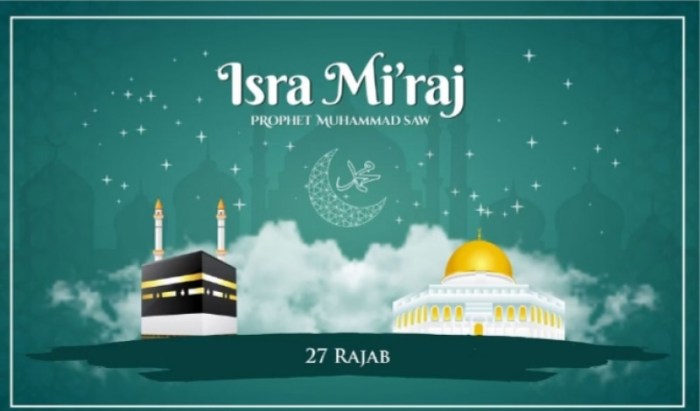
The Isra and Mi’raj, the Night Journey and Ascension of Prophet Muhammad, holds profound religious significance for Muslims. This pivotal event, recounted in Islamic tradition, encompasses a spiritual journey that profoundly impacted the Islamic faith and its practices. The following sections will delve into the key religious teachings revealed during this miraculous night, its impact on Islamic worship, its role in strengthening Muslim faith, and a comparison with other significant events in Islamic history.
Key Teachings Revealed During Isra and Mi’raj
The Isra and Mi’raj revealed several crucial teachings that shaped the foundation of Islamic practice. The most significant is the establishment of the five daily prayers (Salat), a cornerstone of Muslim worship. Before this event, the prayer frequency was debated. The Prophet’s encounter with God in the heavens also reinforced the concept of Tawhid (the absolute oneness of God), emphasizing the importance of sincere devotion and submission to Allah’s will.
The experience solidified the Prophet’s prophethood and his divine commission to deliver God’s message to humanity.
Impact of Isra and Mi’raj on Islamic Worship
The most immediate and tangible impact of the Isra and Mi’raj is the institution of the five daily prayers. This structured system of prayer provides a framework for Muslims to connect with God throughout the day, fostering a sense of constant remembrance and devotion. The event also highlighted the importance of prayer as a means of seeking closeness to God, strengthening the spiritual bond between the believer and the Divine.
The detailed description of the Prophet’s experience during his ascension serves as a model for spiritual aspiration and striving for closeness to God.
Isra and Mi’raj: Strengthening Muslim Faith
The miraculous nature of the Isra and Mi’raj itself serves as a powerful testament to God’s power and the authenticity of the Prophet Muhammad’s prophethood. The journey through the heavens, encountering prophets and witnessing divine majesty, strengthened the faith of early Muslims and continues to inspire believers today. The event underscores the importance of faith in the unseen and the power of belief in the face of seemingly impossible occurrences.
The narrative provides a source of comfort and inspiration during times of hardship and uncertainty.
Comparison of Isra and Mi’raj with Other Significant Events in Islam
The Isra and Mi’raj, while unique in its nature, shares parallels with other pivotal events in Islamic history. The table below compares key aspects of the Isra and Mi’raj with the Hijra (migration to Medina) and the Battle of Badr.
| Aspect | Isra and Mi’raj | Hijra | Battle of Badr |
|---|---|---|---|
| Nature of Event | Spiritual journey and divine revelation | Physical migration and community building | Military victory and spiritual triumph |
| Primary Impact | Establishment of Salat, reinforcement of Tawhid | Foundation of the first Muslim community in Medina | Demonstrated the power of faith and early Muslim resilience |
| Long-term Significance | Shapes daily Muslim worship and spiritual understanding | Marks the beginning of the Islamic calendar and community development | Symbolizes the triumph of good over evil and strength in faith |
Isra and Mi’raj: Inspiring Piety and Obedience
The Isra and Mi’raj serves as a powerful example of piety and obedience to God. The Prophet Muhammad’s unwavering faith and complete submission to God’s will, even in the face of the extraordinary, inspires Muslims to emulate his devotion and commitment to their faith. The event encourages a deeper understanding of the importance of adhering to God’s commandments and striving for spiritual excellence.
The narrative acts as a constant reminder of the rewards awaiting those who remain steadfast in their faith and dedicated to fulfilling their religious duties.